why your core matters

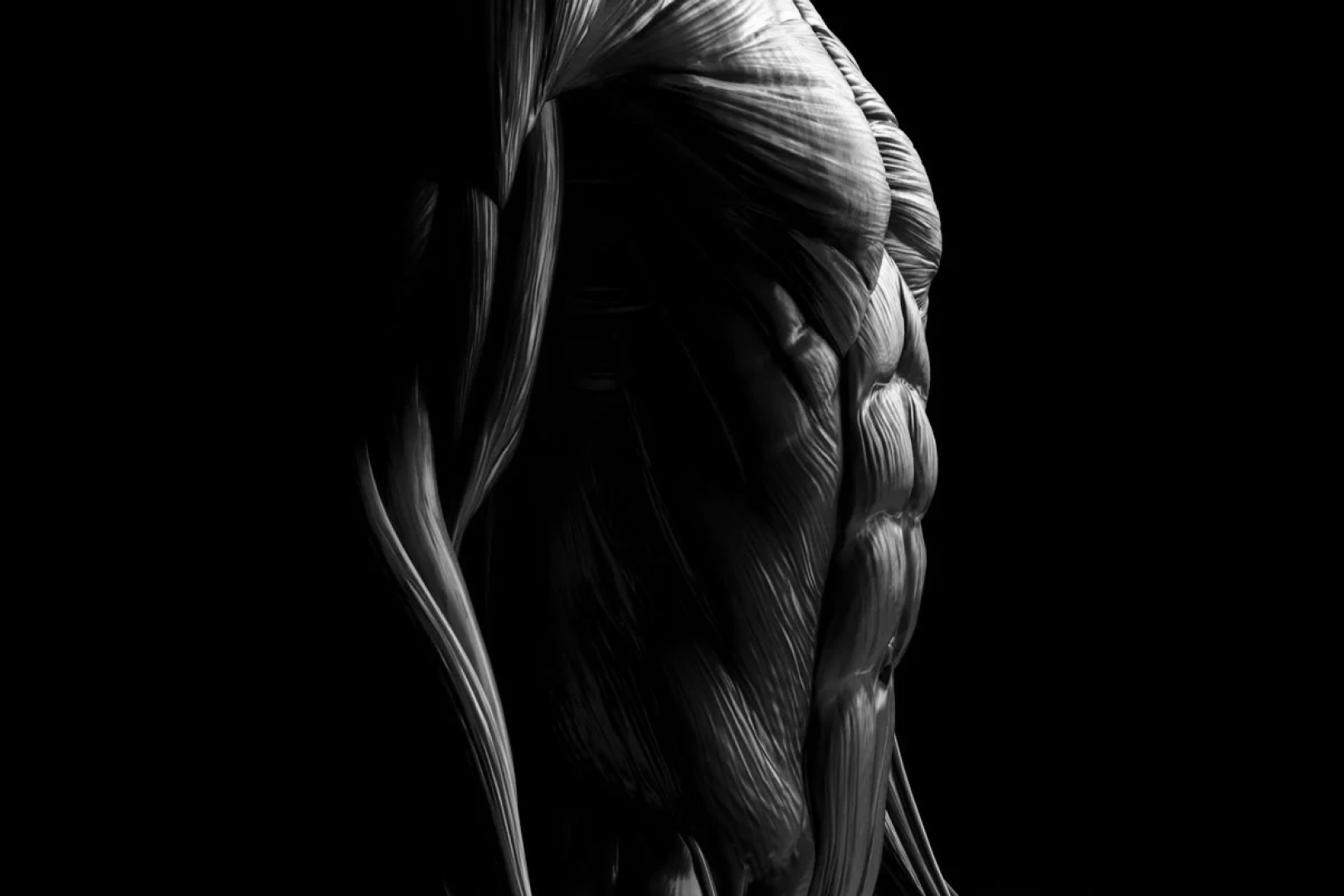
Most people picture “abs” when they hear the word core. But your core is broader; it's a 360° support system around your midsection. It’s the part of you that keeps your spine and pelvis steady so the rest of you can move well.

When it’s doing its job, you feel strong, stable, and coordinated. When it isn’t, you might feel wobbly, limited, or sore—often in places that seem unrelated.

What counts as the core?

A simple definition is: everything that connects your ribs to your pelvis.

That means much more than the front-of-body “abs”. It also includes deep back muscles, the muscles around the hips, and (often overlooked) the pelvic floor: muscles that sit like a sling at the base of the pelvis and support key functions such as bladder and bowel control [1][2].

How your core functions during real movement

With a well-developed core, your deep abdominal muscles (transversus abdominis) can switch on just before quick arm movement, like a built-in “pre‑brace” to help control the spine [3].

In people with low back pain, that timing can be delayed [4]. That doesn’t mean every ache is a “weak core” problem, but it does show how central core coordination is to spinal protection.

Core development is about support and coordination, not one muscle or one exercise. Its real value shows up in three roles:

  • Stability. Preventing the spine and pelvis from collapsing, twisting, or shifting when forces hit you.

  • Transfer. Moving power between the lower body and upper body (running, lifting, throwing, carrying, even walking).

  • Pressure. Coordinating breathing and bracing so the trunk can stiffen when it needs.

Why back pain turns core from theory into reality

Low back pain is common enough that it touches almost every community and workplace. The World Health Organization calls low back pain the leading cause of disability worldwide and estimates about 619 million people were affected in 2020 [5]. A Lancet analysis projects that number could rise to 843 million by 2050 if trends continue [6].

What surprises many people is that most lower back pain isn’t tied to one clearly identifiable structural cause. The International Association for the Study of Pain notes that most people presenting to primary care don’t have a specific identifiable origin for their pain [7].

Exercise is one of the most reliable tools we have. A major Cochrane review found exercise therapy can reduce pain and is probably beneficial for disability in chronic, non‑specific low back pain compared with common treatments in the short and medium term [8].

Core strength for performance

Even if pain isn’t your concern, the core is foundational for strength and power. If your trunk collapses, twists, or over-arches under load, some effort gets spent on regaining position instead of producing clean force.

Having a developed core pays dividends in athletic performance:

  • In a study of 29 high school and college baseball pitchers, peak trunk rotation velocity explained 25% of the variability in fastball velocity [9]. That same study suggested that a 10% increase in trunk rotation velocity corresponded to about a 5% increase in ball velocity.

  • In a motion-capture study of 15 low-handicap golfers, trunk and lower-trunk variables explained 33.7% of the variance in driver clubhead speed and 66.7% of the variance in five-iron clubhead speed [10].

  • In a study on running, upper- and lower-lumbar erector spinae activity averaged about 32–40% of each person’s maximal back-extension effort at 60–80% of heart‑rate reserve during 30 minutes of treadmill running [11].

Balance: a stability skill with high stakes

Balance is partly a leg-and-foot skill, and it is also a trunk-control skill. If your torso drifts too far off center, your legs have to work harder to recover.

In the US, the CDC reports that over 14 million (about 1 in 4) adults age 65+ report falling each year, and falls are the leading cause of injury for that age group [12].

A Cochrane review found that exercise programs can reduce falls in older people living in the community, with approaches that challenge balance playing a central role [13].

Breathing, bracing, and the hidden side of core strength

Your diaphragm (breathing muscle) plays a crucial role in your posture, and research shows that posture is negatively impacted when breathing demands increase [14].

That matters because many “hard” tasks are also “breathing” tasks: long sets, carries, hills, fast-paced work, or anything done while winded. Biomechanics research has also explored how intra‑abdominal pressure can help stabilize the lumbar spine [15].

Keeping your core developed without making it complicated

A better core isn’t built by “more crunches.” It’s built by training the trunk to resist unwanted motion and transfer force. Think about these guiding principles the next time you train:

  • Train in multiple directions. arching (extension), twisting (rotation), and side‑bending (lateral flexion).

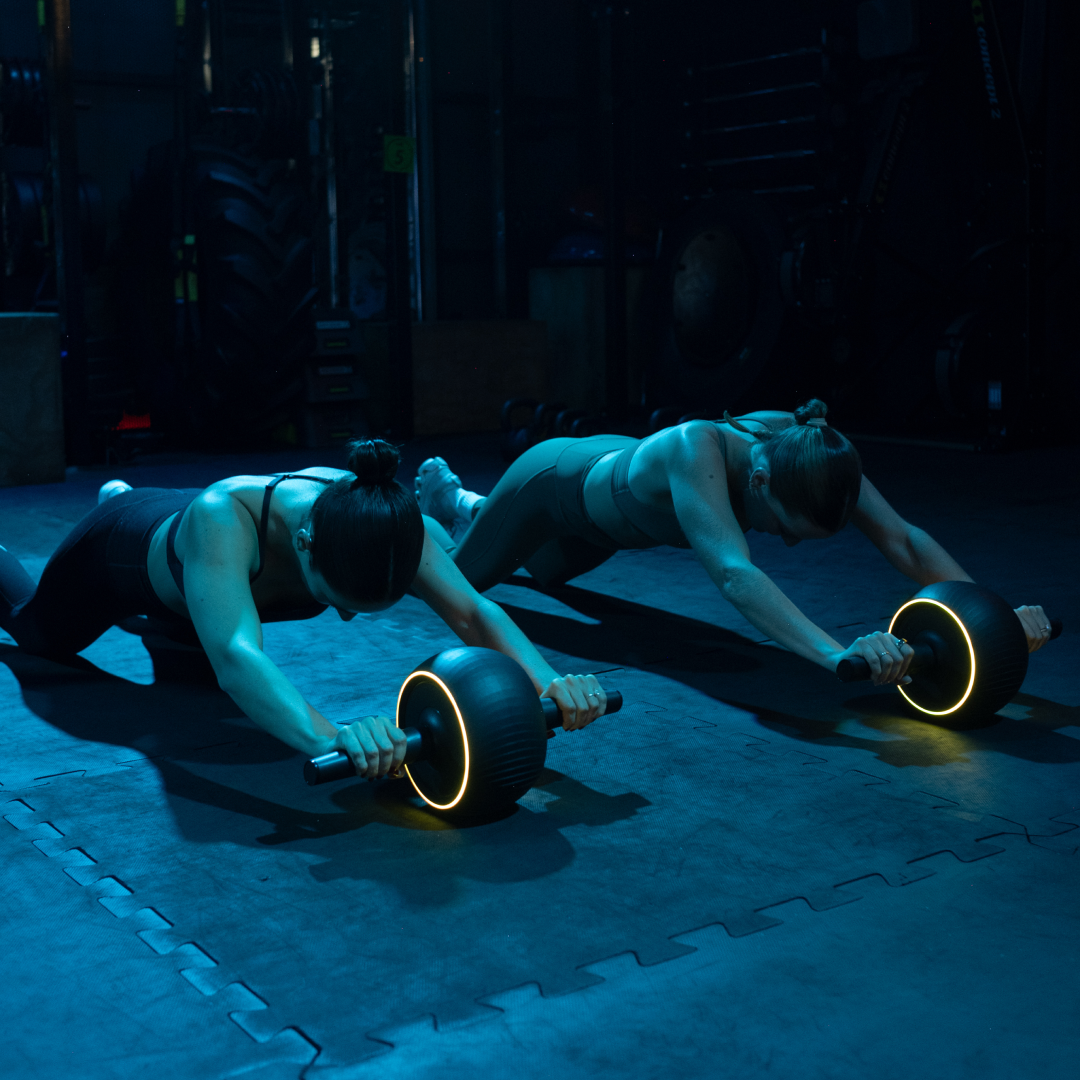
  • Use assistance when you need it. Choose a setup that lets you control the full range without compensating through the low back, hips, or shoulders.

  • Use resistance when you’re ready for it. Add load in a way that keeps the movement honest and repeatable, rather than turning every set into a grind.

  • Track consistency like a training metric. Log sessions, levels, and total work so progress is clear even when workouts are short.

  • Full-body work. Focus on your core when performing squats, hinges, carries, pushes, and pulls.

If you’re dealing with significant pain or recovery, a qualified professional can help you choose safe progressions.

Why we care about this at ZeroWheel

Core development influences how people move, how resilient they feel, and how consistently they can train. That is why ZeroWheel spends so much time on this topic.

We’re building around the idea that core training should be clear, accessible, and worth doing consistently. If the core is the foundation for so many goals, it deserves more than occasional attention.

References

  • Why your core muscles matter. (n.d.). Mayo Clinic. Retrieved from https://www.mayoclinic.org/healthy-lifestyle/fitness/in-depth/core-exercises/art-20044751

  • What are pelvic floor muscles? (n.d.). Cleveland Clinic. Retrieved from https://my.clevelandclinic.org/health/body/22729-pelvic-floor-muscles

  • Hodges, P. W., & Richardson, C. A. (1997). Feedforward contraction of transversus abdominis is not influenced by the direction of arm movement. Experimental Brain Research, 114(2), 362–370. https://doi.org/10.1007/PL00005644

  • Hodges, P. W., & Richardson, C. A. (1996). Inefficient muscular stabilization of the lumbar spine associated with low back pain. A motor control evaluation of transversus abdominis. Spine, 21(22), 2640–2650. https://doi.org/10.1097/00007632-199611150-00014

  • Low back pain. (n.d.). Retrieved from https://www.who.int/news-room/fact-sheets/detail/low-back-pain

  • The Lancet Rheumatology. (2023). The global epidemic of low back pain. The Lancet Rheumatology, 5(6), e305. https://doi.org/10.1016/S2665-9913(23)00133-9

  • The global burden of low back pain. (n.d.). International Association for the Study of Pain (IASP). Retrieved December 19, 2025, from https://www.iasp-pain.org/resources/fact-sheets/the-global-burden-of-low-back-pain/

  • Hayden, J. A., Ellis, J., Ogilvie, R., Malmivaara, A., & Van Tulder, M. W. (2021). Exercise therapy for chronic low back pain. Cochrane Database of Systematic Reviews, 2021(10). https://doi.org/10.1002/14651858.CD009790.pub2

  • Orishimo, K. F., Kremenic, I. J., Mullaney, M. J., Fukunaga, T., Serio, N., & McHugh, M. P. (2023). Role of pelvis and trunk biomechanics in generating ball velocity in baseball pitching. Journal of Strength & Conditioning Research, 37(3), 623–628. https://doi.org/10.1519/JSC.0000000000004314

  • Joyce, C., Burnett, A., Cochrane, J., & Ball, K. (2013). Three-dimensional trunk kinematics in golf: Between-club differences and relationships to clubhead speed. Sports Biomechanics, 12(2), 108–120. https://doi.org/10.1080/14763141.2012.728244

  • Behm, D. G., Cappa, D., & Power, G. A. (2009). Trunk muscle activation during moderate- and high-intensity running. Applied Physiology, Nutrition, and Metabolism, 34(6), 1008–1016. https://doi.org/10.1139/H09-102

  • CDC. (2024, October 28). Older adult falls data. Older Adult Fall Prevention. https://www.cdc.gov/falls/data-research/index.html

  • Sherrington, C., Fairhall, N. J., Wallbank, G. K., Tiedemann, A., Michaleff, Z. A., Howard, K., Clemson, L., Hopewell, S., & Lamb, S. E. (2019). Exercise for preventing falls in older people living in the community. Cochrane Database of Systematic Reviews, 2019(1). https://doi.org/10.1002/14651858.CD012424.pub2

  • Hodges, P. W., Heijnen, I., & Gandevia, S. C. (2001). Postural activity of the diaphragm is reduced in humans when respiratory demand increases. The Journal of Physiology, 537(Pt 3), 999–1008. https://doi.org/10.1111/j.1469-7793.2001.00999.x

  • Cholewicki, J., Juluru, K., & McGill, S. M. (1999). Intra-abdominal pressure mechanism for stabilizing the lumbar spine. Journal of Biomechanics, 32(1), 13–17. https://doi.org/10.1016/S0021-9290(98)00129-8